Why Chronic Pelvic Pain Is Often Misdiagnosed
Chronic pelvic pain is frequently dismissed as unexplained or psychological when the true cause, pelvic congestion syndrome, is simply never specifically looked for. Here is why this happens and how to get an accurate diagnosis.
A Pain That Is Real but Often Not Believed
Chronic pelvic pain is one of the most common reasons women seek medical care, yet it remains one of the most frequently misdiagnosed conditions in gynaecological and general medical practice. Many women describe a long, exhausting journey through multiple specialists, repeated scans that come back reported as normal, and a growing sense of frustration when doctors suggest that the pain may be psychological in origin because no clear structural cause has been found. Understanding why this happens is the first step toward getting a correct diagnosis faster.
In our practice in Hyderabad, it is not unusual to meet women who have consulted five or six different doctors over two to three years before pelvic congestion syndrome, a treatable venous cause of pelvic pain, is finally considered. This article explores the reasons behind this pattern of misdiagnosis and outlines a clearer path to accurate diagnosis and effective treatment.
Chronic Pelvic Pain Has Many Possible Causes
One of the fundamental reasons chronic pelvic pain is difficult to diagnose is that the pelvis houses reproductive, urinary, gastrointestinal, vascular and musculoskeletal structures, all packed closely together, and pain arising from any one of them can feel remarkably similar to pain arising from another. A dull ache low in the abdomen could originate from the ovaries, the uterus, the bladder, the bowel, the pelvic floor muscles or the pelvic veins, and distinguishing between these possibilities on symptoms alone is genuinely difficult even for experienced clinicians.
- Gynaecological causes: endometriosis, adenomyosis, fibroids, ovarian cysts, pelvic inflammatory disease
- Vascular causes: pelvic congestion syndrome, pelvic venous incompetence
- Gastrointestinal causes: irritable bowel syndrome, chronic constipation, diverticular disease
- Urological causes: interstitial cystitis, recurrent urinary tract infection
- Musculoskeletal causes: pelvic floor muscle spasm, sacroiliac joint dysfunction
- Psychological contributors, which can coexist with but do not replace a physical cause
Because so many conditions can produce overlapping symptoms, doctors working in isolation within their own speciality may reasonably rule out the causes within their expertise and, understandably, stop the search there, even though the true cause lies in a different organ system altogether.
Why Pelvic Congestion Syndrome Is Particularly Easy to Miss
Pelvic congestion syndrome is especially prone to being overlooked for several specific reasons. First, the abnormal veins responsible for the pain are deep within the pelvis and cannot be felt on a standard physical or pelvic examination, unlike a fibroid or an enlarged ovary, which can sometimes be palpated directly. Second, a routine transabdominal pelvic ultrasound, the test most commonly ordered as a first step for pelvic pain, frequently fails to show the dilated pelvic veins clearly, because it is not typically performed with the specific Doppler technique and patient positioning needed to detect venous reflux.
Third, because the standard gynaecological ultrasound report often comes back stating that the uterus and ovaries appear normal, both doctor and patient may reasonably conclude that there is no structural explanation for the pain, when in fact the correct structures were never specifically examined for venous disease in the first place. Fourth, general awareness of pelvic venous disease as a distinct, treatable diagnosis is still growing among many practising clinicians, partly because it sits at the intersection of gynaecology and vascular surgery and has historically not had a single speciality champion in routine training.
- Deep pelvic veins cannot be felt on physical examination
- Routine transabdominal ultrasound often misses venous reflux
- A normal-looking uterus and ovaries on scan can wrongly reassure both doctor and patient
- The condition falls between gynaecology and vascular surgery
- Symptoms overlap heavily with more commonly considered gynaecological diagnoses
The Emotional Toll of a Delayed Diagnosis
Beyond the physical discomfort, living for years with unexplained pelvic pain takes a genuine emotional toll. Many women report feeling dismissed, disbelieved or labelled as anxious when repeated investigations return normal results, and some are prescribed antidepressants or advised to manage stress without ever having their pelvic veins specifically evaluated. This experience can erode trust in the medical system and lead some women to simply stop seeking further care, quietly living with pain that could have been substantially reduced with the right diagnosis.
It is important for both patients and doctors to recognise that a normal standard pelvic ultrasound does not rule out pelvic congestion syndrome, and that persistent, unexplained pelvic pain deserves a specific, targeted look at the pelvic venous system before being labelled as having no physical cause.
Distinguishing Features That Point Toward a Venous Cause
While no symptom is completely specific, certain features in the history should raise suspicion for pelvic congestion syndrome and prompt a referral for venous-specific imaging. Pain that is positional, meaning it worsens through the day with standing or sitting and improves substantially with lying flat, is a strong clue, since this pattern reflects the effect of gravity on blood pooling within incompetent veins, exactly as it does in leg varicose veins.
- Pain that worsens with prolonged standing and improves when lying down
- Deep pain during or after sexual intercourse
- Pain that intensifies in the days before menstruation
- Presence of varicose veins in the vulva, buttock or inner thigh
- Pain that has persisted for more than six months despite normal gynaecological scans
- A history of one or more pregnancies
- Coexisting leg varicose veins or a family history of venous disease
When several of these features are present together, particularly in a woman who has been pregnant and has already had a gynaecological work-up that came back essentially normal, it is reasonable and appropriate to request a dedicated pelvic venous evaluation.
The Correct Diagnostic Pathway
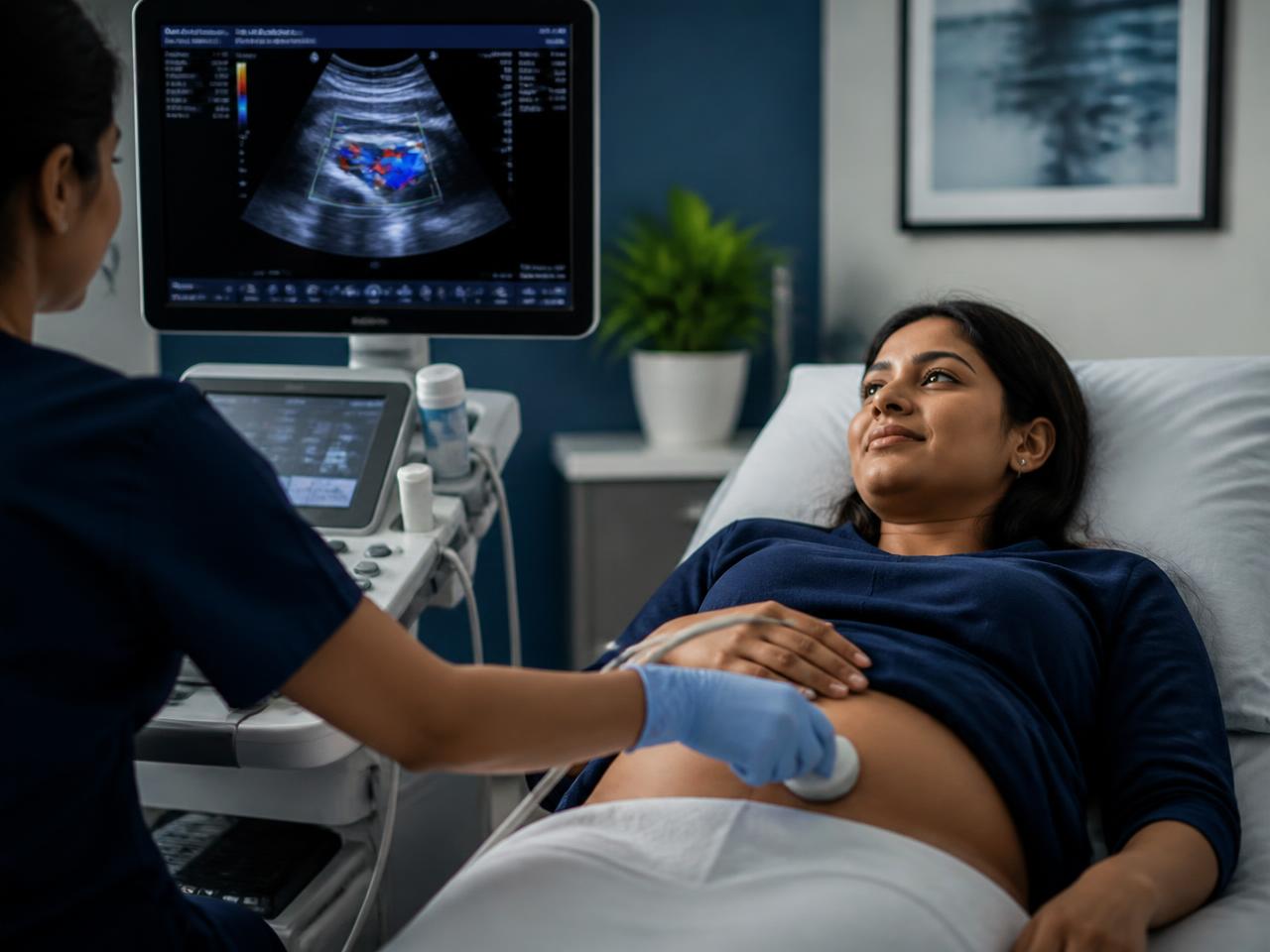
A structured approach helps avoid both under-diagnosis and unnecessary repeated testing. The pathway generally begins with a careful history focused specifically on the pattern, timing and triggers of pain, followed by a pelvic examination and a transvaginal ultrasound performed with attention to venous Doppler flow in the ovarian and pelvic veins, not merely the uterus and ovaries themselves. If this raises suspicion of venous incompetence, cross-sectional imaging with CT venography or MR venography provides a more complete anatomical picture and helps exclude other pelvic pathology at the same time.
Catheter-based pelvic venography remains the definitive test and is generally performed when non-invasive imaging has already suggested pelvic congestion syndrome, since it allows direct visualisation of reflux in the ovarian and internal iliac veins and can proceed straight to embolization treatment in the same sitting if abnormal veins are confirmed. This staged approach avoids subjecting every woman with pelvic pain to an invasive test while ensuring that women with a genuine venous cause are not left undiagnosed.
- Detailed history with attention to positional and cyclical pain patterns
- Pelvic examination
- Transvaginal ultrasound with dedicated venous Doppler assessment
- CT venography or MR venography for anatomical mapping
- Catheter pelvic venography as the definitive, often combined diagnostic and therapeutic step
The Value of a Multidisciplinary Approach
Because chronic pelvic pain can have overlapping causes, the most reliable path to an accurate diagnosis usually involves close collaboration between a gynaecologist and a vascular surgeon with specific interest and experience in pelvic venous disease. A gynaecologist can confidently exclude or treat conditions such as fibroids, adenomyosis or endometriosis, while a vascular surgeon can assess the pelvic venous system in detail and determine whether venous incompetence is contributing to, or fully explaining, the pain.
This collaborative model avoids the common scenario in which a woman is repeatedly reassured that her scans are normal without ever having the pelvic veins specifically assessed, and it also avoids the opposite error of attributing all pelvic pain to venous disease without adequately excluding other treatable gynaecological conditions.
What Happens Once the Correct Diagnosis Is Made
Once pelvic congestion syndrome is confirmed as a contributing or primary cause of chronic pelvic pain, treatment options range from conservative measures such as compression garments and lifestyle modification for milder cases, to ovarian vein embolization for women with moderate to severe symptoms who want a definitive, minimally invasive solution. Ovarian vein embolization is performed under local anaesthesia with sedation, involves a same-day or overnight hospital stay, and is generally reported to provide meaningful symptom relief in roughly seventy-five to eighty-five percent of appropriately selected women, with recovery to normal activity typically within one to two weeks.
The relief that many women describe after finally receiving a correct diagnosis, quite apart from the physical improvement following treatment, is itself significant, since years of unexplained pain and repeated normal test results can be deeply unsettling. Simply having a clear, evidence-based explanation for the pain often restores a sense of control and confidence in the treatment plan going forward.
Practical Advice for Women With Unexplained Pelvic Pain
If pelvic pain has persisted for more than six months despite normal gynaecological scans, it is reasonable to specifically ask whether the pelvic veins have been assessed and to request a transvaginal ultrasound with dedicated venous Doppler evaluation, or a direct referral to a vascular surgeon experienced in pelvic venous disease. Keeping a simple diary of pain patterns, noting whether pain worsens with standing, improves with lying down, or intensifies around menstruation or intercourse, can provide valuable information that helps the treating doctor narrow down the likely cause more quickly.
- Ask specifically whether the pelvic veins have been evaluated, not just the uterus and ovaries
- Request a transvaginal ultrasound with venous Doppler assessment if pain persists beyond six months
- Keep a diary of pain patterns related to posture, activity, and the menstrual cycle
- Seek a vascular surgery opinion if gynaecological investigations are normal but pain continues
- Do not accept a purely psychological explanation without first having a targeted venous assessment
If you or a loved one is struggling with unexplained pelvic pain that has not responded to standard gynaecological treatment, consider a consultation at the Pelvic Vein Clinic (/pelvic-vein-clinic), where a focused, vein-specific evaluation is offered alongside routine gynaecological and general surgical assessment. Dr. Pritee Sharma's work in this field was featured in a Times of India article on pelvic congestion syndrome, which helped bring wider public and physician awareness to this frequently missed cause of chronic pelvic pain in Indian women.
Readers who also have visible varicose veins in the legs, or a family history of venous disease, may find it useful to read more about lower-limb venous disease on the varicose veins treatment page (/services/varicose-veins-treatment-hyderabad), since pelvic and leg venous insufficiency frequently coexist and share a common underlying tendency toward weak vein walls and valves. More about Dr. Pritee Sharma's training, credentials and approach to vascular care is available on the about page (/about-dr-pritee-sharma), and appointments or queries can be directed through the contact page (/contact).
Closing Thoughts
Chronic pelvic pain that has been repeatedly labelled as unexplained is not a dead end, but rather a sign that the diagnostic search needs to include the pelvic venous system alongside the more commonly considered gynaecological, gastrointestinal and urological possibilities. With a structured, multidisciplinary approach and the right imaging, most women with pelvic congestion syndrome as an underlying or contributing cause can finally receive an accurate diagnosis and access treatment that meaningfully improves their quality of life.
Common Diagnostic Detours Women Experience
It is common for a woman with pelvic congestion syndrome to first be evaluated for irritable bowel syndrome, given dietary advice and antispasmodic medication that provides little lasting benefit, before being referred onward for gynaecological review. From there, a laparoscopy may be performed to look for endometriosis, and if only mild or no endometriosis is found, the pain is sometimes attributed to the small amount of endometriosis seen even when it does not fully explain the severity of symptoms, or the woman is told that nothing abnormal was found at all.
Urology referral for possible interstitial cystitis or recurrent urinary infection is another common detour, particularly when pain is felt more toward the front of the pelvis or is associated with urinary urgency. While these conditions genuinely exist and must be considered, the pattern of a woman cycling through three or four specialities over several years without a clear answer should itself be a signal to specifically evaluate the pelvic veins, since this diagnostic gap is a well-recognised feature of pelvic congestion syndrome specifically.
The Role of Awareness Campaigns and Media Coverage
Increasing public and physician awareness of pelvic congestion syndrome has been an important factor in shortening the diagnostic delay that many women experience. Media coverage that explains the condition in accessible language helps women recognise their own symptoms and ask their doctors directly about pelvic venous causes of pain, rather than waiting for the diagnosis to be suggested to them. This kind of awareness-building complements, rather than replaces, careful clinical evaluation, but it plays a genuine role in prompting earlier, more targeted assessment.
Building Better Awareness Among Referring Doctors
Family physicians, general practitioners and even gynaecologists in early training may not routinely consider pelvic venous disease as part of the standard differential diagnosis for chronic pelvic pain, since venous conditions are traditionally taught within vascular surgery rather than gynaecology curricula. Closing this gap requires ongoing continuing medical education, joint clinical discussions between gynaecology and vascular surgery departments, and a willingness on the part of referring doctors to consider a vascular opinion when standard gynaecological, urological and gastrointestinal work-up does not explain persistent pelvic pain.
As this cross-speciality awareness grows, the time from symptom onset to correct diagnosis is gradually shortening, though there remains considerable room for improvement, particularly outside major metropolitan centres where access to vascular surgeons with a specific interest in pelvic venous disease may be more limited.
- Varicose Veins Treatment in Hyderabad
- Peripheral Artery Disease Treatment
- Diabetic Foot Care Specialist
- DVT Treatment in Hyderabad
- Angioplasty for Blocked Leg Arteries
- Carotid Surgery — Stroke Prevention
- Venous Stenting for Chronic Leg Swelling
- AV Fistula Creation for Dialysis
- EVAR — Endovascular Aneurysm Repair
- TEVAR — Thoracic Aortic Repair
- About Dr. Pritee Sharma
- Vascular surgery FAQs