Pelvic Pain After Pregnancy: When Veins Are the Cause
Why persistent pelvic pain after delivery can be venous rather than gynaecological, how pregnancy changes pelvic vein physiology, and when new mothers should seek a vascular evaluation.
Pelvic Pain After Delivery Is Common, But Not Always Normal
It is well known that the postpartum period brings its share of aches, from uterine involution cramps to episiotomy or caesarean incision discomfort, and most new mothers are told, correctly, that some pelvic discomfort in the early weeks after delivery is expected. The difficulty arises when pain persists well beyond the usual six-to-eight week recovery window, or when it has a character that does not fit typical postpartum healing.
In these persisting cases, one cause that is frequently missed is venous, specifically pelvic congestion syndrome or postpartum pelvic vein thrombosis, both of which relate to how pregnancy changes the venous system rather than to the uterus or perineal tissues healing normally.
How Pregnancy Changes Pelvic Vein Physiology
During pregnancy, blood volume increases substantially, and rising levels of progesterone relax the walls of veins throughout the body, including the ovarian and pelvic veins. At the same time, the growing uterus presses on the pelvic veins and the inferior vena cava, particularly on the right side of the body being less affected and the left ovarian vein being more prone to compression and dilation.
These changes mean that by late pregnancy, many women have measurably dilated ovarian and pelvic veins compared with before pregnancy. In most women these veins gradually return closer to their pre-pregnancy calibre over the weeks after delivery, but in a proportion of women, especially after multiple pregnancies, the vein walls and valves do not fully recover and remain dilated with incompetent valves, setting the stage for pelvic congestion syndrome.
Why Multiple Pregnancies Increase Risk
Each pregnancy places an additional round of mechanical and hormonal stress on the pelvic venous system, and the risk of developing pelvic congestion syndrome rises with the number of prior pregnancies. This is one reason the condition is seen more often in women in their thirties and forties who have had two or more children compared with first-time mothers.
Distinguishing Normal Postpartum Recovery Pain
Normal postpartum pain typically improves steadily week by week, is centred around the lower abdomen related to the shrinking uterus (afterpains, which are more noticeable while breastfeeding due to oxytocin release), or is localised to a healing incision or perineal repair site, and responds well to routine pain relief and time.
By around six to eight weeks postpartum, most of this normal discomfort should have settled substantially, and any pain that is still significant at this stage, or that is actually getting worse rather than better, deserves closer evaluation rather than being brushed off as 'just recovery taking time.'
The Pattern That Suggests a Venous Cause
Postpartum pelvic congestion syndrome tends to present with the same postural pattern seen in non-pregnancy-related cases: a dull, dragging ache that worsens through the day, especially with standing to care for a newborn, carrying the baby, or standing while feeding, and that eases when the mother lies down.
Many new mothers describe this pain as different in character from their earlier postpartum cramping, more of a constant heaviness or pressure than a cramp, and often note that it is aggravated specifically by the long periods of standing and carrying that come with caring for an infant, which unfortunately is very difficult to avoid in early motherhood.
Overlap With Pelvic Floor Dysfunction
Childbirth, particularly vaginal delivery, can stretch and weaken the pelvic floor muscles and connective tissue, leading to its own pattern of pelvic pain, a feeling of pelvic organ heaviness or bulging, and sometimes urinary leakage or difficulty with bowel movements. This pelvic floor dysfunction can coexist with, and sometimes be worsened by, underlying pelvic congestion, since a weakened pelvic floor provides less structural support against the added pressure of engorged pelvic veins.
Distinguishing the two is important because pelvic floor dysfunction responds well to a structured pelvic floor physiotherapy programme, whereas pelvic congestion syndrome generally needs a venous-specific evaluation and, when significant, an interventional treatment such as embolization. In practice, many postpartum women benefit from addressing both issues together rather than assuming one explanation covers everything.
When Pain Points Toward Deep Vein Thrombosis Instead
It is important to separate chronic pelvic congestion pain from an acute pelvic or deep vein thrombosis, which is a genuine medical emergency more common in the postpartum period due to the naturally increased clotting tendency of pregnancy and childbirth. Acute thrombosis typically causes sudden, severe, one-sided pain and swelling, often in the leg or groin, sometimes with redness and warmth, and can be associated with breathlessness or chest pain if a clot has travelled to the lungs.
Any new mother experiencing sudden severe leg or pelvic pain with swelling, especially in the first six weeks after delivery, should seek emergency care immediately rather than waiting for a routine outpatient appointment, since this presentation is entirely different from the gradual, positional ache of chronic pelvic congestion.
- Sudden, severe, one-sided leg or pelvic pain with swelling: seek emergency care immediately
- Fever with pelvic pain in the postpartum period: needs urgent review for possible infection
- Heavy vaginal bleeding beyond expected lochia: needs urgent obstetric review
- Breathlessness or chest pain alongside leg swelling: emergency, possible pulmonary embolism
- Persistent dull, dragging pelvic ache beyond eight weeks, worse standing and better lying flat: appropriate for a routine vascular evaluation
- Visible new varicose veins around the vulva or thigh appearing during or after pregnancy: worth a vascular opinion
When to Seek a Vascular Opinion After Pregnancy
A reasonable point to seek a dedicated vascular evaluation is when pelvic pain persists beyond the usual eight-to-twelve week postpartum recovery window, when the pain has the characteristic postural pattern of worsening with standing and improving lying flat, or when a postpartum check-up with the obstetrician has ruled out infection, retained tissue, and other gynaecological causes without finding an explanation.
It is also reasonable to seek an earlier opinion if visible varicose veins appeared around the vulva or inner thigh during pregnancy and have not resolved months after delivery, since these are often a visible marker of the same underlying venous incompetence causing the internal pelvic pain.
How the Evaluation Proceeds
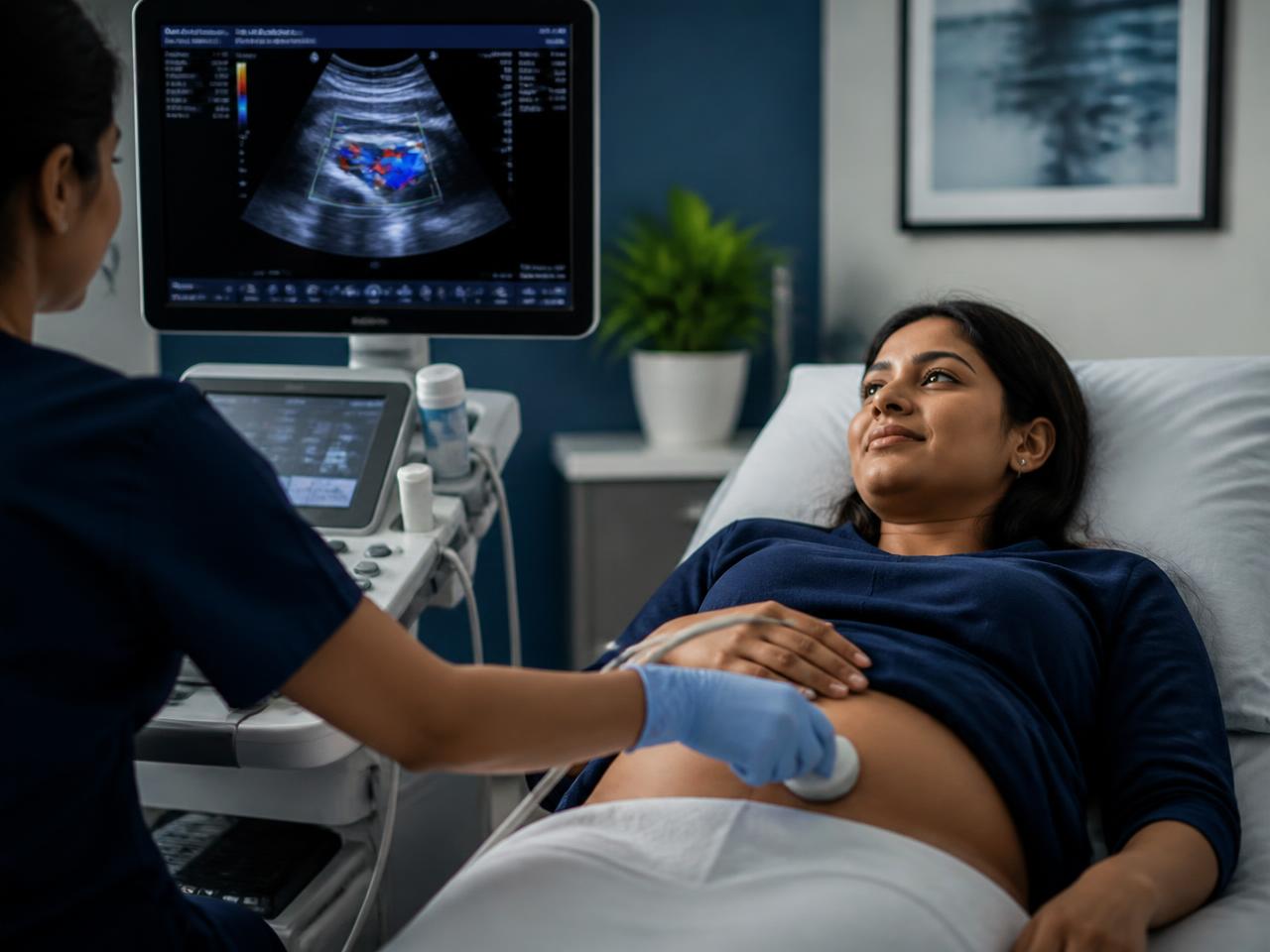
The work-up generally begins with a detailed history focused on the timing, character, and postural pattern of the pain, followed by a transvaginal ultrasound with Doppler to look for dilated, refluxing pelvic veins. If findings are suggestive, a CT or MR venogram is used to map the venous anatomy more completely before deciding on a treatment plan.
Because postpartum women are also breastfeeding in many cases, the timing and choice of imaging and any later procedure are discussed carefully, and in most cases breastfeeding does not need to be interrupted for either the diagnostic imaging or for an ovarian vein embolization procedure, though this is confirmed on an individual basis.
Treatment Considerations Specific to Postpartum Women
For postpartum women with confirmed pelvic congestion syndrome, initial conservative measures such as compression garments, activity modification, and pelvic floor physiotherapy where there is overlapping pelvic floor weakness are often tried first, particularly within the first several months after delivery, since some degree of venous recovery can still occur during this period.
If symptoms remain significant beyond this observation period, or are severe enough to significantly affect daily function and bonding with the newborn, ovarian vein embolization can be considered using the same day-care, minimally invasive approach used in non-postpartum patients, with attention paid to timing around breastfeeding and any ongoing recovery from delivery.
The Emotional Weight of Unexplained Postpartum Pain
Persistent, unexplained pelvic pain in the postpartum period carries a particular emotional burden, layered on top of the physical and emotional demands of caring for a newborn, sleep deprivation, and hormonal changes. Many women describe feeling dismissed when pain is attributed simply to 'normal recovery' well past the point where that explanation makes sense, and this can contribute to anxiety or a reluctance to keep pursuing answers.
Having a clear, physical explanation, when a venous cause is indeed found, is often itself a relief for patients, even before treatment begins, simply because it validates that the pain has a real, treatable basis rather than being something to simply endure indefinitely.
It is also useful for new mothers to know that hormonal contraception started in the postpartum period, particularly combined oestrogen-containing methods, can in some cases further relax vein walls and slightly worsen venous symptoms, which is worth mentioning to the prescribing doctor if pelvic aching has already been troublesome, so that an alternative contraceptive method can be considered if appropriate.
Breastfeeding itself does not appear to worsen pelvic congestion symptoms directly, but the physical demands of frequent feeding sessions, often done sitting in one position for extended periods, can contribute to general pelvic and lower back discomfort that may be layered on top of any underlying venous ache, making it sometimes difficult for a new mother to tell the two apart without a careful history.
Sleep deprivation and general fatigue in the newborn period can also lower a woman's threshold for pain and make an existing mild venous ache feel more prominent than it might otherwise, which is one more reason a thorough, patient history-taking approach is important rather than assuming the pain is purely psychological or simply due to tiredness.
Indicative Costs and Practical Planning for New Mothers
As an indicative figure only, diagnostic imaging for postpartum pelvic pain in Hyderabad, including a transvaginal ultrasound and, if needed, a CT or MR venogram, typically costs in the range of INR 3,000 to INR 15,000 depending on which tests are required, while a subsequent ovarian vein embolization procedure, if recommended, commonly falls in the broad range of INR 90,000 to INR 1,80,000 as discussed with the treating team based on the individual case.
Practical planning matters for new mothers considering this pathway, including arranging childcare support for the day of any procedure and the following day, since a short period of rest is advised even though the procedure itself is day-care and recovery is generally quick.
A Note on Future Pregnancies
Women who are treated for pelvic congestion syndrome and later wish to have more children are generally able to do so; embolization of the ovarian veins does not affect fertility, since it targets the venous drainage system rather than the ovary or fallopian tube itself. That said, each pregnancy does carry its own fresh hormonal and mechanical load on the pelvic venous system, so it is reasonable to expect that symptoms could theoretically recur or a different vein could become symptomatic after a future pregnancy, which is worth discussing individually with the treating vascular surgeon.
Bringing It Together
Public awareness of this condition is slowly improving, in part because of coverage such as Dr. Pritee Sharma's Times of India feature on pelvic congestion syndrome, which walked readers through how the diagnosis is often missed and what a proper vascular evaluation actually involves.
Persistent pelvic pain after pregnancy deserves a proper explanation rather than an assumption that time alone will resolve it, and understanding how pregnancy specifically alters pelvic vein physiology helps make sense of why this particular group of women is at higher risk of pelvic congestion syndrome.
If leg heaviness, visible varicose veins or ankle swelling accompany the pelvic symptoms, it is reasonable to have both territories assessed together, and information on leg vein treatment is available at /services/varicose-veins-treatment-hyderabad.
For a focused, non-rushed evaluation of pelvic vein-related pain, the Pelvic Vein Clinic at /pelvic-vein-clinic brings together transvaginal ultrasound, CT or MR venography and same-visit counselling so that a clear treatment plan can be drawn up without months of uncertainty.
For background on Dr. Pritee Sharma's qualifications, including her DNB Gold Medal and two decades of vascular surgery practice, see /about-dr-pritee-sharma; appointment queries can be directed through /contact.
- Varicose Veins Treatment in Hyderabad
- Peripheral Artery Disease Treatment
- Diabetic Foot Care Specialist
- DVT Treatment in Hyderabad
- Angioplasty for Blocked Leg Arteries
- Carotid Surgery — Stroke Prevention
- Venous Stenting for Chronic Leg Swelling
- AV Fistula Creation for Dialysis
- EVAR — Endovascular Aneurysm Repair
- TEVAR — Thoracic Aortic Repair
- About Dr. Pritee Sharma
- Vascular surgery FAQs